Recap IBTC 2026
Theme: Rerouting Cycling & Hiking Routes
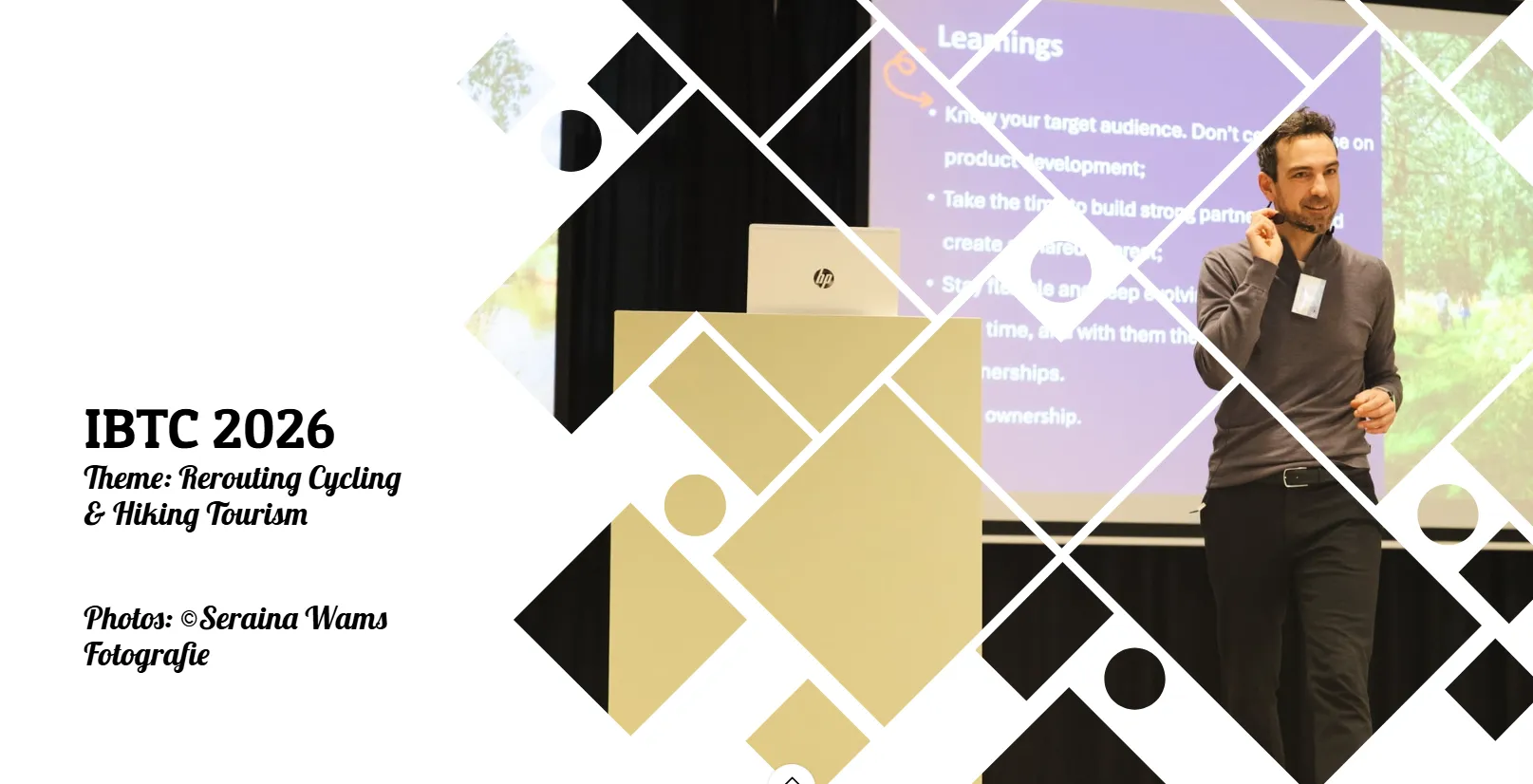
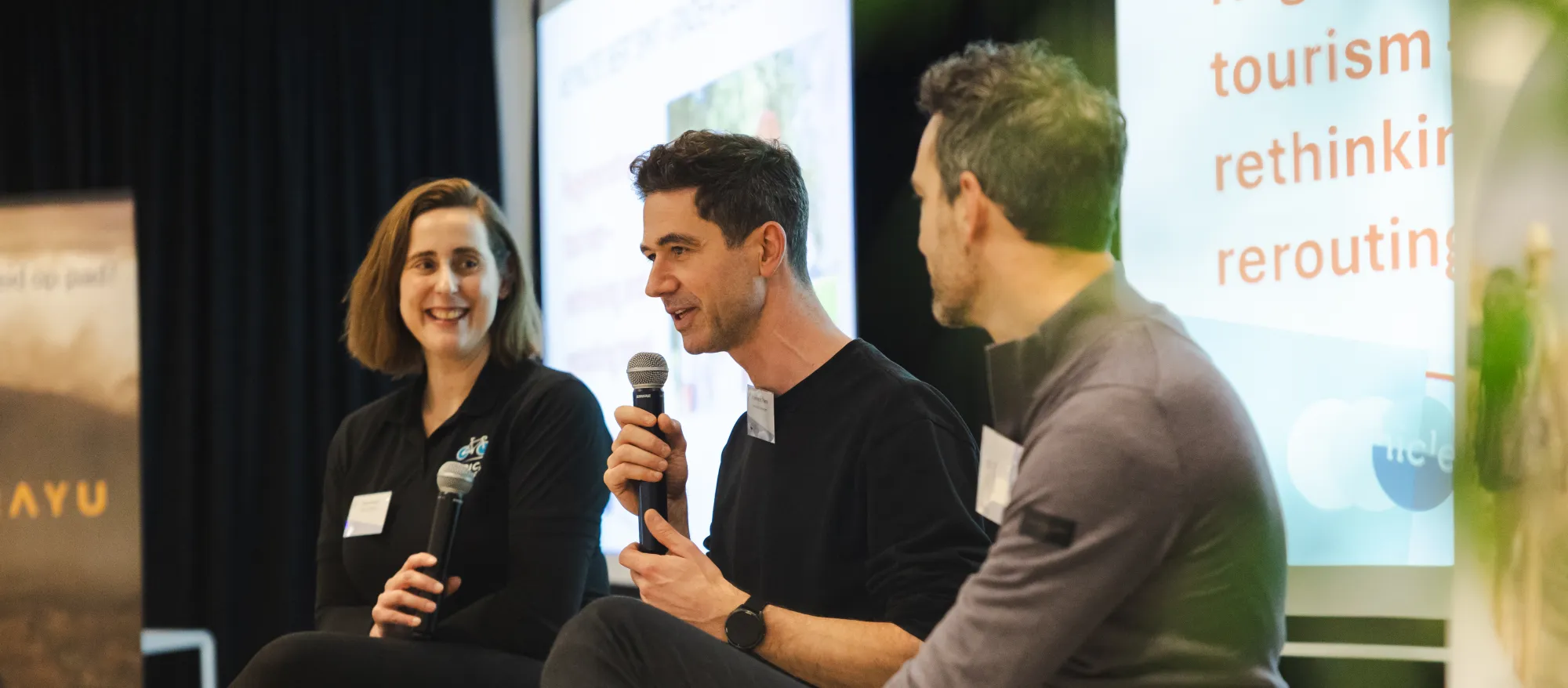
Eighty participants and speakers from fourteen European countries gathered for a day filled with inspiring keynotes, engaging breakout sessions, discussion groups and valuable networking opportunities. Attendees included professionals from policy, education, regional marketing and promotion, route development, and research.
The attendees were present to tackle one of the industry’s most pressing challenges: how do we spread visitor pressure while maintaining the magic that draws people to nature in the first place?
Marjan Gielen, conference organizer and tourism professional, set the tone: “Destinations struggle with busy paths and exhausted nature, while new regions could benefit from spreading. How can we make steps forward to redistribute our hikers and cyclists?”
Morning Keynote: The Psychology Behind the Path
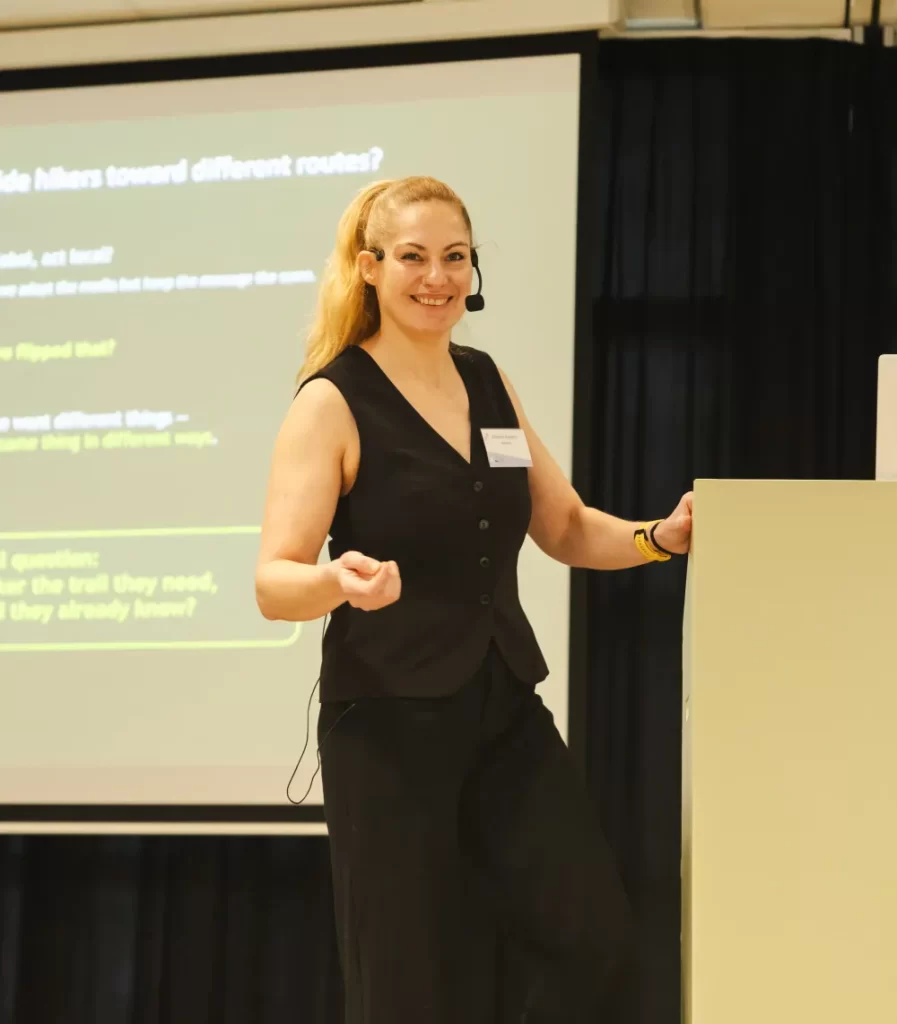
Exploring the Unbeaten Tracks with Shanna Bussink (Rayu)
Former aerobics instructor turned professional wilderness guide Shanna Bussink challenged conventional wisdom: “How can we make hikers experience the same level of happiness on lesser-known trails?” Social media algorithms funnel hikers toward Instagram-worthy destinations, but the issue runs deeper, it’s about mismatched expectations. Hikers who “failed” a trail didn’t need a different route; they needed a different story for the same trail.
Her solution? Hikeprofiler.com, a personality-based matching system categorizing hikers into four profiles based on core motivational drivers: The Idealist (meaning and connection), The Traditionalist (safety and familiarity), The Trailblazer (challenge and achievement), and The Pioneer (adventure and discovery).
For destination managers, this means identifying which value sets lesser-known trails speak to, then crafting targeted messaging. “Our job isn’t to promote routes, it’s to help hikers discover the trail they need, even if they didn’t know it existed.” The Q&A clarified her approach: rather than forcing trails to suit everyone, identify natural appeals and target communication to aligned hiker profiles.
Breaking Out: Visitor Management in Action
The MONA Project: Spreading Pressure in Brabant and Antwerp
Two neighboring regions faced identical challenges: 70 million annual hikes in North Brabant, with 90% concentrated at eight starting points. Fabio Tat (Routebureau Brabant) and Koenraad Pierre (Tourism Province of Antwerp) shared how the MONA project reshapes hiking infrastructure.
Brabant’s Wandelstarter platform addresses spontaneous Sunday morning hikers who make ad-hoc decisions. It consolidates parking, routes, navigation, and amenities at strategic starting points, including innovative “boeren poorten” farmer partnerships. The project employs behavioral nudging, GPS monitoring, and stakeholder collaboration.
Antwerp’s bold approach: screen 4,500 kilometers of network and delete one-third. “Hikers know where to find quality,” Pierre explained. His team reshaped landscapes around routing, environment variation, and infrastructure, serving user needs first, system logic second.
Their biggest lesson? Communication. “Never assume, always overcommunicate.”
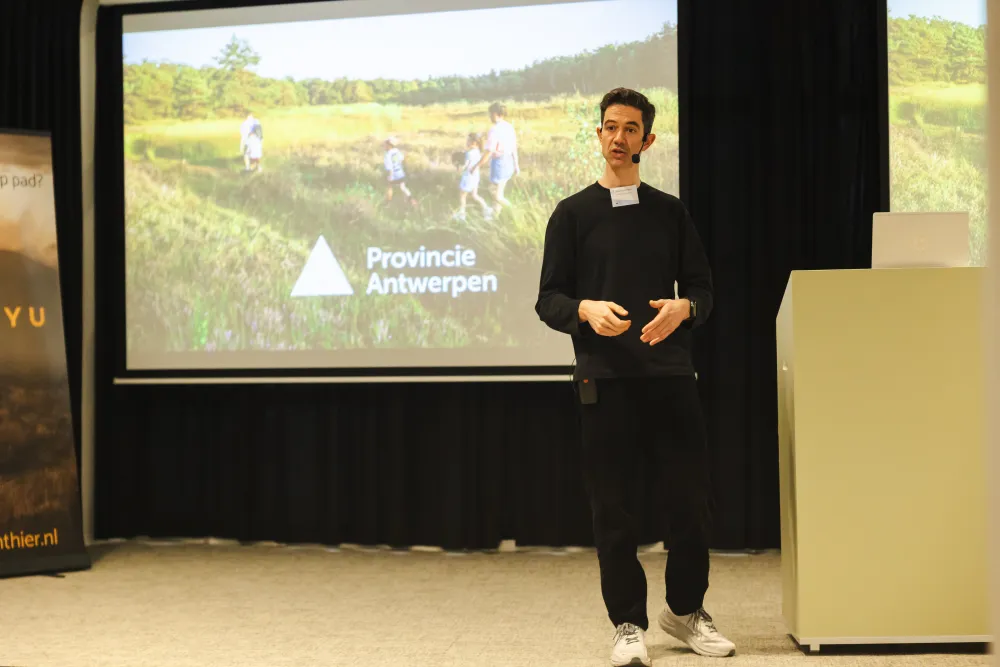
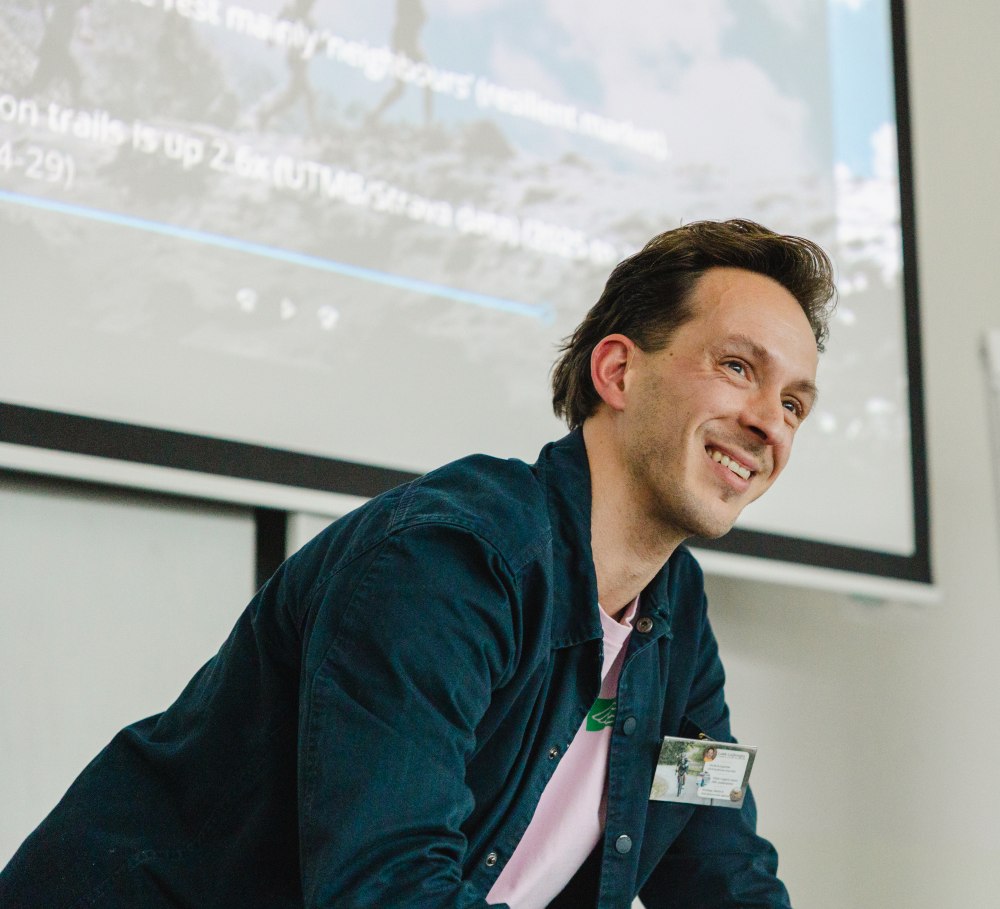
The Q&A confirmed they’re developing farmer partnerships while managing high-traffic areas, building infrastructure backbone before storytelling. Constant stakeholder dialogue proved more critical than technical solutions. (Photo of Koenraad Pierre, TPA)
Breaking Out: Lessons from Türkiye
The conclusions of Loek Luijbregts, Cycling Incubators
Over the past decade, Türkiye has taken a deliberate, long-term approach to cycling tourism as part of a broader strategy to diversify its tourism offering and stimulate year-round destination development. During his breakout session, Loek Luijbregts focused primarily on the practical lessons learned from cycling and trail tourism projects in Türkiye. His reality check: “Trends are markers, not solutions.” Rather than relying on short-term campaigns and chasing trends, he advised investing in locally rooted systems that continue to attract visitors long after campaign or government budgets have run out.
He zoomed in on three projects. The coastal town of Marmaris, known for its resorts and sun-and-sea tourism, developed a cycling network around the city and invited bloggers to test it and contribute ideas for further development. The strategy proved successful, leading to a growing number of active tourists in spring and autumn. Other cases included the transformation of the Kaçkar Mountains and Cappadocia into destinations for trail runners, making use of the existing infrastructure of unpaved roads.
Loek also drew lessons from the past: “A strategy that promotes active tourism by focusing solely on performance does not work. Even tourists who come to train are still on holiday – and they want a holiday vibe, with good coffee spots, appealing restaurants, and culture.”
Keynote: From Consumption to Contribution
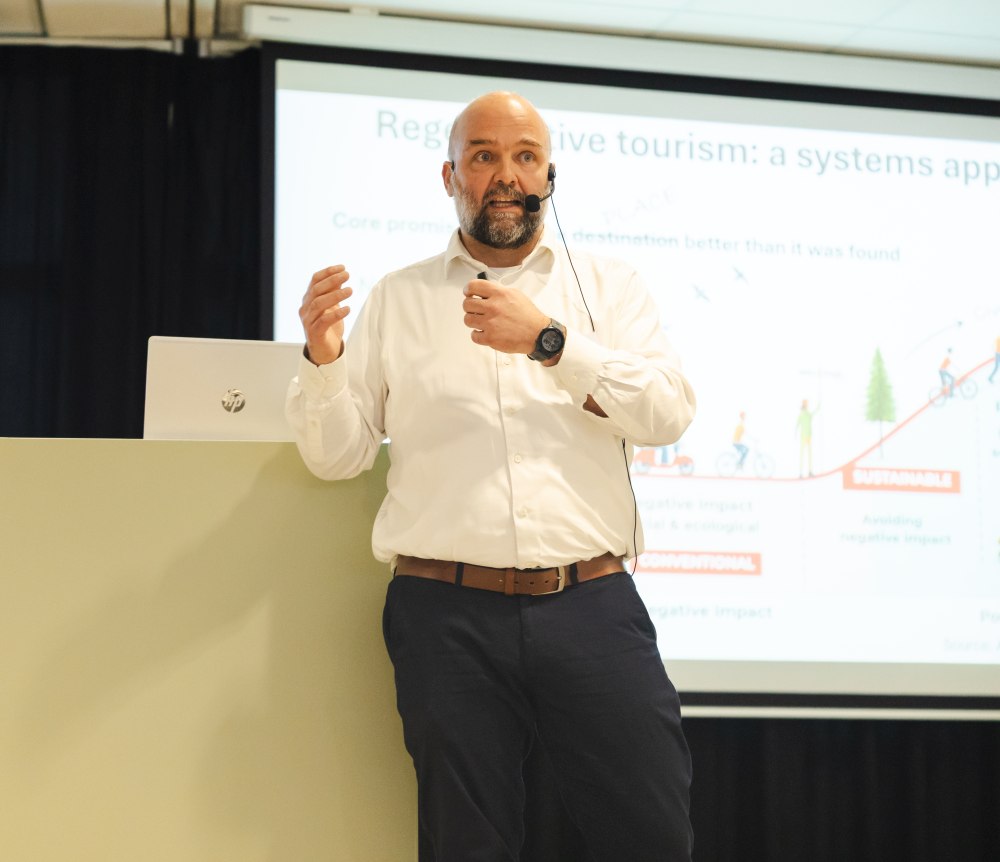
Regenerative Tourism with Bert Smit (Ginder, BUas)
Bert Smit brought 30 years of zoo experience to sustainable tourism: “How do we develop destinations so they do better?”
He traced tourism 5,000 years back to trade routes, where hospitality was founded on reciprocity, commensality, and grace. Today’s challenge? Transform tourism from extractive to regenerative, visitors leaving places better than found.
Compelling case studies included the Camino’s Juan, a fisherman whose grilled dinners for pilgrims became the trail’s most mentioned experience, proof authentic local connection outweighs monuments. Huesca positions hiking as economic infrastructure. Oberlausitz transforms mines into outdoor communities. Van Gogh National Park’s 125-year evolution creates interactive experiences rerouting tourist behavior.
“Regenerative tourism means shifting from consumer to guest, from growth goals to post-growth community integration.” His cautionary close: Van Gogh saw industrial revolution damage but no one listened, he lost himself fighting. “Let’s honor his vision in a net-positive, sustainable way.”
Breaking Out: France’s Cycling Success Story
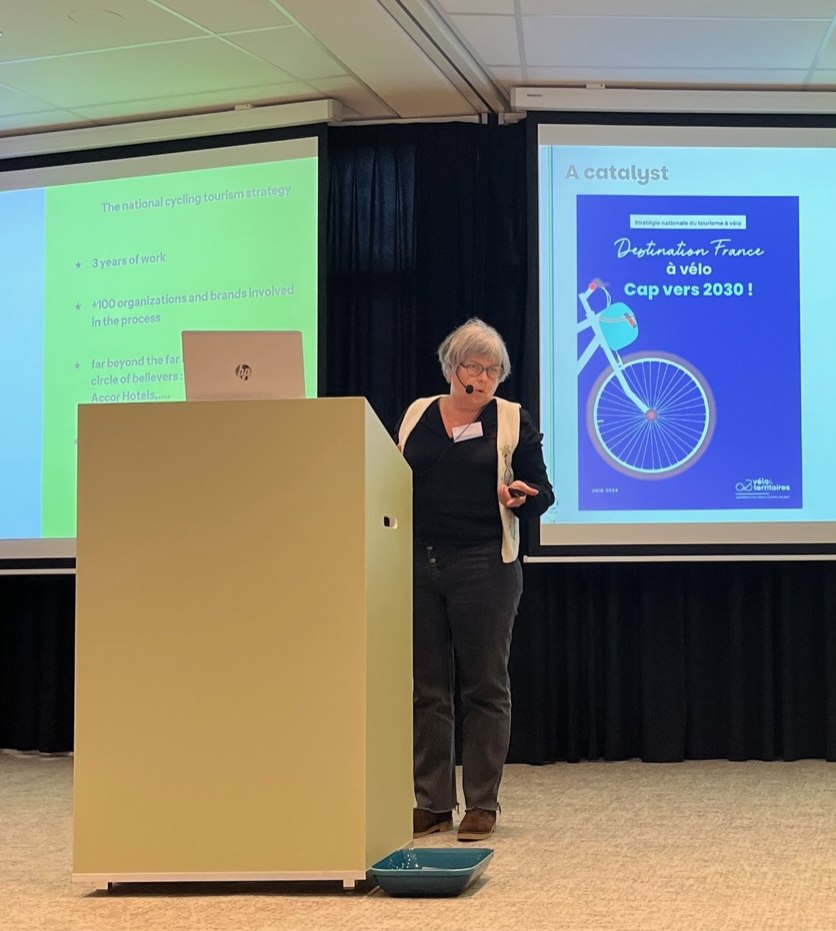
Building Consensus Across Fragmentation with Karine Dupuy (France Vélo Tourisme)
How did the Tour de France homeland become a cycling tourism powerhouse?
Collaboration, not infrastructure. Karine Dupuy described France’s “territorial layer cake”, every administrative level developing separate brands, websites, and marketing. Total fragmentation.
In 2000, ten visionaries united: “We need to work together, promoting France’s cycling tourism as a whole.” Twenty-six years later, France Vélo Tourisme promotes 79 routes across 11 regions through seven success factors: national scheme for routes/greenways; balanced public-private governance; user experience priority; Accueil Vélo quality standard (designed by cyclists); high-quality monthly data; pooled promotion budgets promoting themes rather than destinations; and transparency culture with constant partner access.
The 2023 breakthrough: a national strategy involving 100+ organizations including Decathlon and Accor Hotels. “France’s success isn’t about routes, it’s about people deciding to work together.” The Accueil Vélo system costs €200 per DMO inspection, with €15 renewals funding pooled promotion. Five-year DMO surveys track volumes, typologies, spending, and rural economic evolution, proving collaboration delivers measurable results.
Breaking out: Bridging the Data Gap
Combining ground data with floating data by Robin Ranjore (Eco-Counter)
Robin Ranjore presented examples in his breakout session of how on-the-ground counters, combined with floating data (GPS signals and mobile phone data), can be used to manage visitor flows in a specific area.
At the popular surf spot Pointe de la Torche in France, visitor flows were recorded and analyzed using four automatic counting systems on the ground, combined with GPS and mobile phone signals. This data formed the basis for a flow analysis: how many people visit the site, on which days and at what times, which routes they take, and where they come from? Based on these insights, the managers of La Torche were able to implement concrete measures to better manage visitor flows, including rerouting certain trails, installing information panels, and promoting active mobility (cycling) to and from La Torche.
In Stołowe Mountains National Park (Poland), 38 counters were installed to measure visitor flows on two popular hiking trails. By establishing a maximum capacity per trail, a daily quota could then be determined, significantly improving the visitor experience. Importantly, this did not negatively impact overall visitation to the park, which even increased slightly. Session participants then worked on several practical case studies themselves, applying these principles to manage visitor flows.
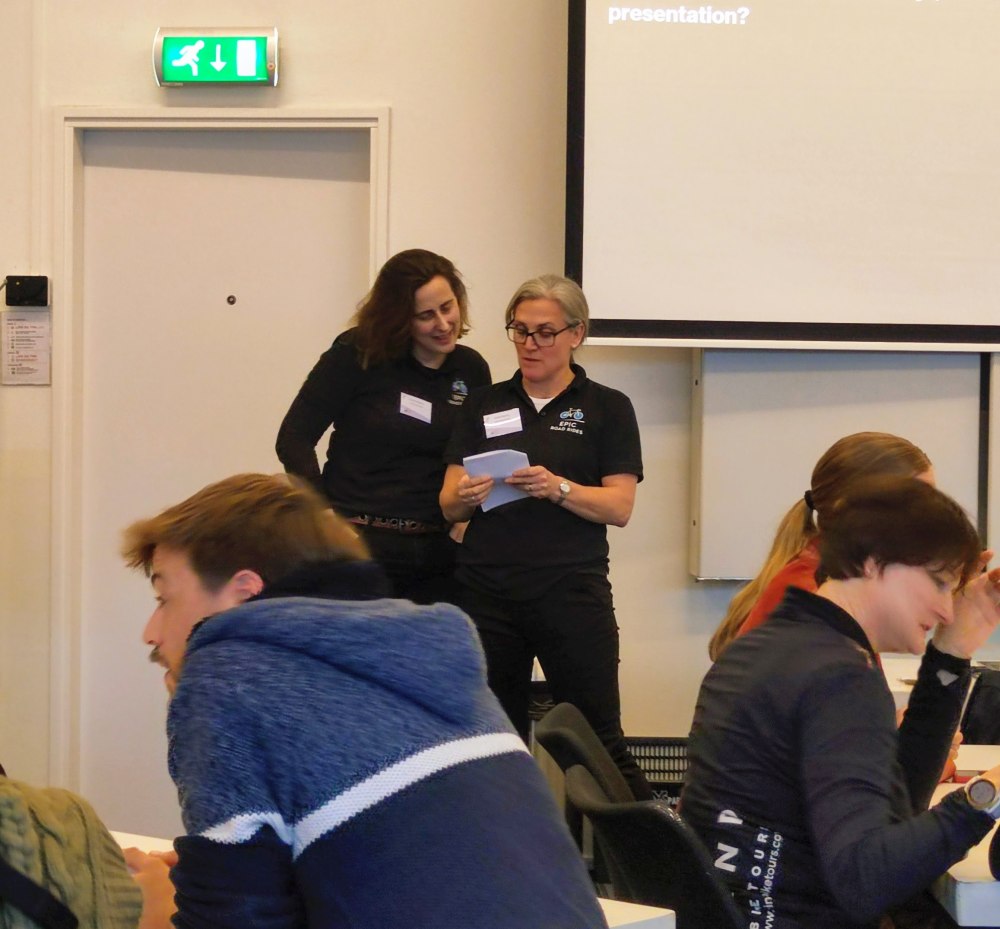
Breaking out: From hidden to must-ride
Putting emerging cycling destinations and routes on the map, by Clare Dewey and Kate Norris (Epic Road Rides)
In this lively, interactive session, participants were given concrete strategies to raise consumer awareness of a cycling route or route network. After defining the positioning of the route and identifying the route’s USPs (type of cyclist, accessibility, landscape, surface, highlights, added value, etc.), the next step is to map out the information cyclists need in order to actually ride the route.
This is followed by assembling a well-balanced marketing mix, consisting of owned channels (the foundation), paid channels, and earned publicity (free media exposure). Clare and Kate illustrated this approach with several case studies and introduced a series of roundtable questions, which participants worked on in groups.
Breaking out: Building a Safer Future
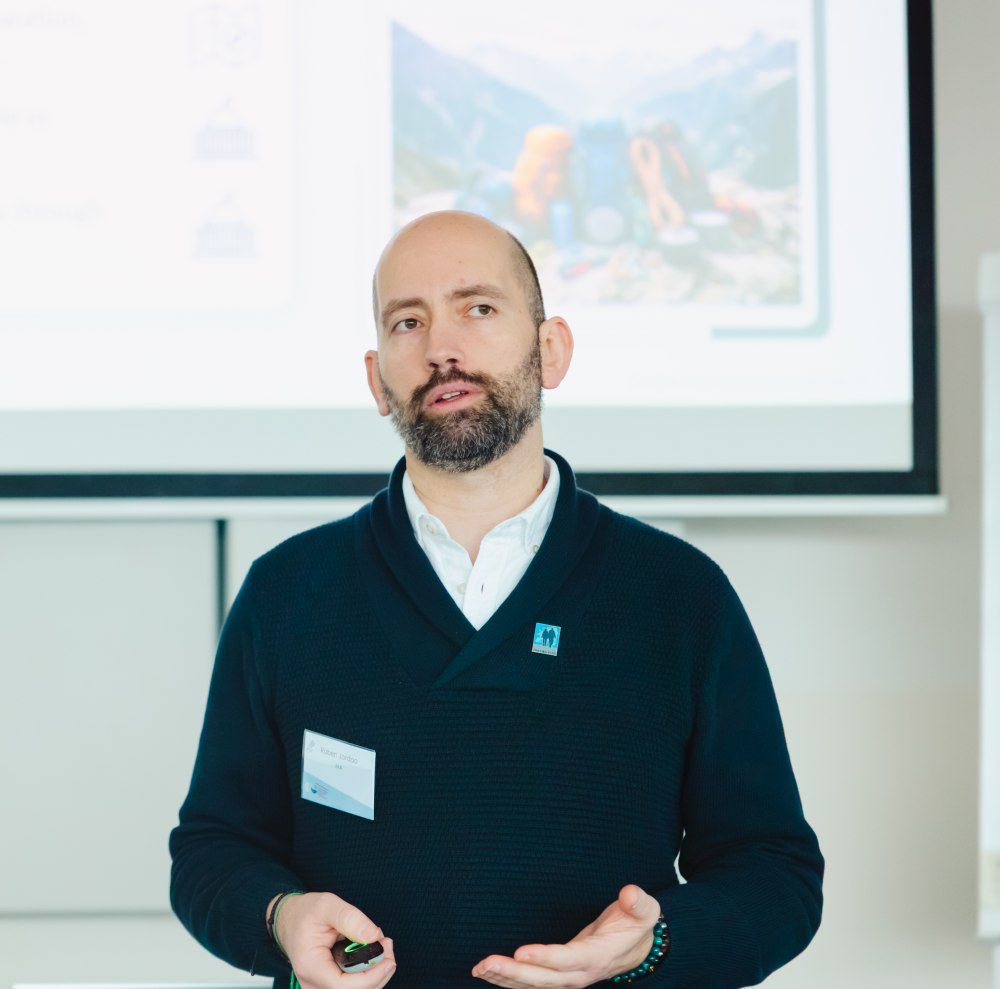
Youth engagement and Outdoor Responsibility by Rúben Jardao (ERA)
How do you engage young people – the leaders and decision-makers of tomorrow – in hiking and hiking organizations? That question was central to the breakout session led by Rúben Jardao, Vice-President of the European Hiking Federation (ERA).
The share of young people participating in outdoor activities in Europe is increasing, but this does not automatically mean they become active within hiking organizations. To address this gap, ERA – together with other organizations – has developed a dedicated youth policy. Examples include the Youth Ambassadors Program and the Youth Mentorship Program by ERA, as well as the Erasmus+ Path project and the HIKE project.
An integral part of this youth policy is a strong focus on trail safety, as youth engagement strengthens safety culture. “Many accidents on the trails can be prevented through better preparation and planning,” Rúben stated.
Breaking out: The Big Picture – European Cycling Tourism Trends
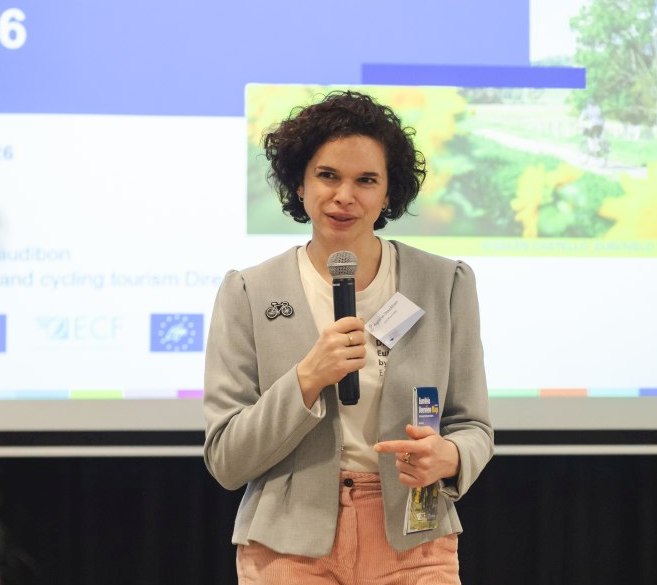
What’s Ahead with Agathe Daudibon (European Cyclists’ Federation)
Agathe Daudibon outlined five critical trends: (1) AI and digital innovation, tourists using AI to plan trips creates trust questions and web traffic drops; destinations should make essential data downloadable only from official sites. (2) Personalization at scale, diversify offerings, build short routes around long-distance infrastructure under strong brands like EuroVelo. (3) Industry measurement gap, cycling tourism exceeds cruise tourism economically, but outdated numbers undermine advocacy; ECF aggregates European data, dreaming of an EU Observatory of Cycling Tourism. (4) Multi-purpose networks serving tourism and transport simultaneously. (5) Political recognition, advocating for cycling tourism in EU’s 2026 sustainable tourism strategy, with 2028-2034 budget negotiations ahead.
The Q&A addressed the measurement gap: ECF partners with stakeholders, academia, and EU parliament to aggregate fragmented cross-border data. While tour operators represent only 5% of cycling tourism, comprehensive measurement requires capturing the broader ecosystem. The challenge isn’t data lack, it’s coordination across boundaries making existing information accessible and actionable.
Breaking Out: The Dutch Data Advantage
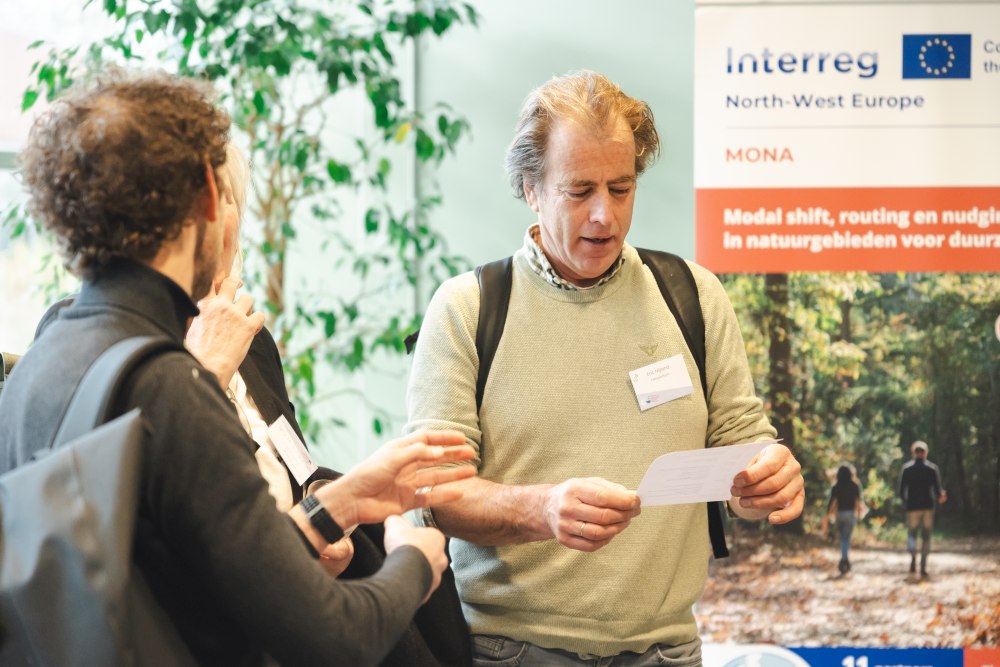
Measuring What Matters with Eric Nijland (Fietsplatform)
Eric Nijland brought hard numbers: 532 million annual cycling trips by Dutch residents, e-bike use up 44%, over 50% using node networks. Economic impact? €1.8 billion spent on cycling trips lasting an hour or longer. Health motivations rising, 32% cycle more for health reasons.
Measurement tools include absolute methods (manual counting, on-road counters, camera/radar) and relative methods (Bluetooth/WiFi, apps like Strava, rental data, parking usage). Top three cyclist improvements wanted: path safety and comfort, managing road user types and numbers, and more rest places.
The Path Forward
As the conference closed, a clear picture emerged. The future of hiking and cycling tourism isn’t about building more trails, it’s about understanding why people choose them, how they experience them, and what value they seek.
It’s about data-driven decisions and human-centered design. It’s about deleting routes to improve quality, not adding them to boost quantity. It’s about hikers becoming guests and tourists becoming contributors.
Most importantly, it’s about collaboration. From Brabant to Antwerp, from France to the European Cyclists’ Federation, the message was unanimous: fragmentation is the enemy, and shared purpose is the solution.
As Shanna Bussink reminded us: “Let’s not start with the product. Start with the story of the hiker.”
Or as Karine Dupuy put it: “Success isn’t about routes. It’s about people deciding to work together.”
The paths are waiting. Now it’s time to reroute.